AI-free. Captured, not generated

Exploring Tuscany
Where to go and what to explore when you travel in Tuscany
PHOTOGRAPHYTRAVELFOOD
Alex
11/21/2025
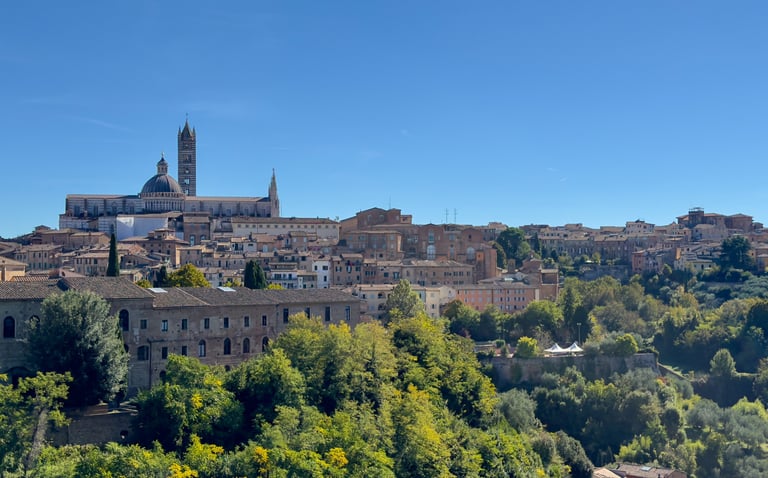
Siena. Like stepping into a living medieval movie
Tuscany
After having spent the most of two months in and around Tuscany, I want to pass on our experiences in terms of what to see and where to visit, because there is just so many options that it may help to try to prioritise in advance rather than just take the shotgun approach as one usually doesn't have an unlimited amount of time available. If you are into historical sites and great food, Tuscany is for you! If your time is limited and you have to pick three places to see and the basic Tuscan foods to eat, then here's my two cents on the subject:
First, Florence is not listed here as it a story of its own. Now I have not visited all the old towns in Tuscany and I don't claim to be any real authority on the subject but we did visit quite a few and if I had to recommend just four, they would be (not in order of preference):
Siena
Siena, like other Tuscan hill towns, was first settled in the time of the Etruscans (c. 900–400 BC) when it was inhabited by a tribe called the Saina. In modern times Siena is famous for(among other thins) for the The Palio di Siena horse race that takes place twice a year in the Piazza del Campo, Siena’s main square. It's a perfectly preserved medieval city with narrow winding streets that are a delight to walk through. There are also lots of restaurants to sit down for a drink or a meal. Siena is famous for the Pici pasta (thick hand-rolled noodles), Panforte (a dense, spiced dessert from Siena) and Ricciarelli (almond cookies). If you don't like large crowds, visit during off-season.
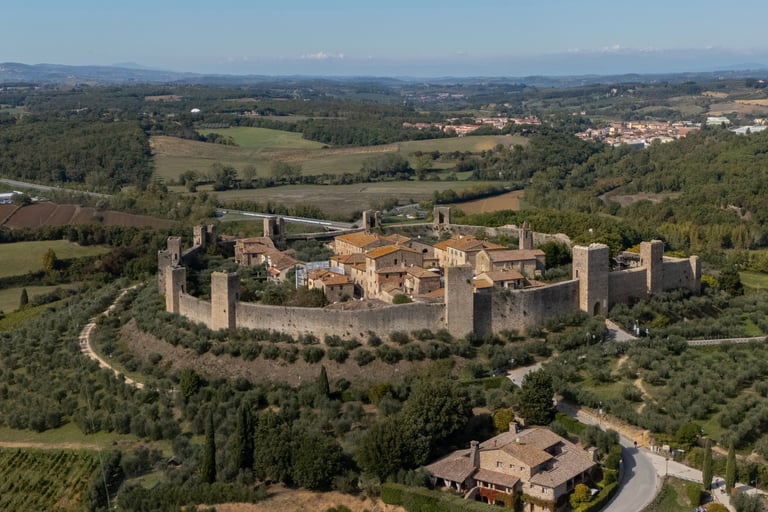
Monteriggioni
Monteriggioni is known for being one of the best-preserved medieval walled towns in all of Italy. It is located quite close to Siena and is easy to access as there is a large parking lot with reserved spaces even for RV's, which is not self-evident in this part of the world. It is magical medieval village with a quiet cobblestone piazza, a small Romanesque church (Chiesa di Santa Maria Assunta), a few wine bars and trattorias and some artisan shops. If you have a chance, it's worth going back to in the evening for a cosy meal. We had a wonderful dinner at one of the Osterias, the Antico Travaglio. Unfortunately, the Lasagne was finished when we came, as this place is rather known for it.
San Gimignano
San Gimignano is a UNESCO World Heritage Historic Center well worth visiting. The town is famous for its medieval towers. In the Middle Ages, wealthy families built tall stone towers to show off their power.. Originally there were 72 towers — today 14 remain. They give the town a dramatic, fortress-like skyline you can’t find anywhere else in Italy.
With regards to local delicacies, San Gimignano produces one of Italy’s oldest and most respected white wines, the Vernaccia di San Gimignano. It's crisp, dry and already mentioned by Dante!
Another place the town is famous for is the multiple-time Gelato World Champion, Gelateria Dondoli. We had a scoop of two flavours each and it’s genuinely good — not just hype. If you visit the town, you have to try it!
Other things the town is known for are: Saffron, Truffle products, handcrafted leather, Tuscan ceramics and of course local wines and olive oils. There are more stores and streets to explore here than in Monteriggioni, so this is more of a whole day trip. Be prepared for large crowds and long lines as this is a popular site. Finding a parking spot if you are driving is also not easy so come early, that helps!
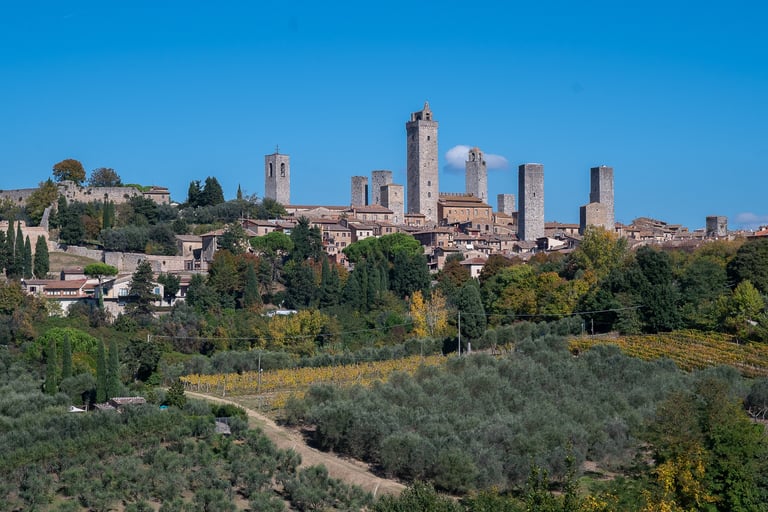
San Gimignano, Like stepping into the 1300s.
Monteriggioni, a hilltop castle town with great restaurants
Monteriggioni is easy to explore as it only takes an hour to walk through it. The combination of accessibility, ease to explore, great places to sit down for a meal or a drink and just the ambiance of this place made it into one of my definite favourites in the Tuscan region.

L'Osteria Gelateria Antico Travaglio
Pienza
Pienza for me was an unexpected surprise. Miia had been there before and suggested we go there for the day after an overnight visit to Montepulciano (also worth visiting). Pienza is a real Renaissance rags to riches story. It used to be a small, very poor village on top of a hill, close to the larger Montepulciano. For most of the 1300s and early 1400s, the Catholic Church went through a period called the Western Schism (1378–1417) — when there were two, and eventually three, rival popes at the same time. After 1378, different groups of cardinals elected their own popes. One pope ruled from Rome, another pope ruled from Avignon, France, a third pope was later elected in Pisa during an attempt to fix the problem — which made things worse.
Pius II (born Enea Silvio Piccolomini in the village of Corsignano in 1405) originally supported the conciliar movement and served in the court of the anti-popes. He was deeply involved in European politics and later reversed course and supported strong papal authority. He understood the Church’s divisions from the inside because he once backed the opposing side. This gave him a unique perspective when he became pope in 1458. When he became pope in 1458, he decided to completely redesign his birthplace. He transformed the medieval village into a planned Renaissance town and in 1462, he renamed it Pienza, meaning “City of Pius”
Pienza was then redesigned by Pope Pius II as a model of perfect Renaissance urban planning. It’s admired for its harmonious symmetry, beautiful piazzas, elegant palaces and clean, proportional architecture.
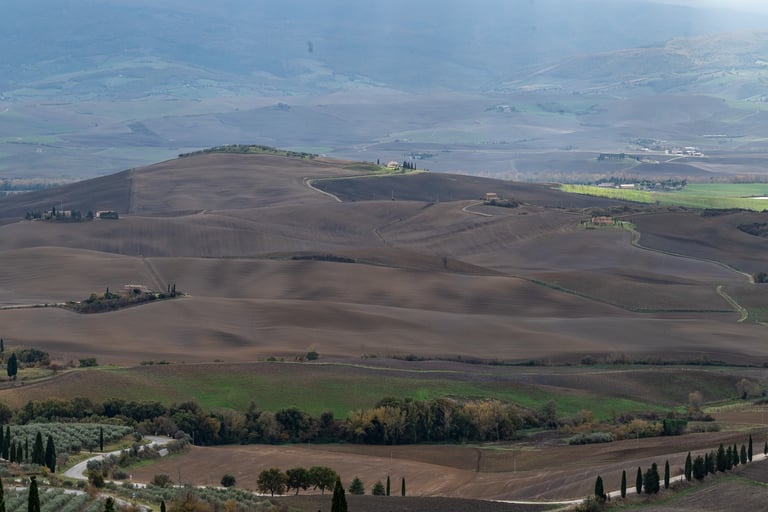
We found a nice Bar on the southern edge of town, sat down and had some wine while enjoying some of the most spectacular views ever. Being there in November, there were not that many tourists either so it wasn't hard to find a table.
Pienza is the town for pecorino lovers. It’s known for its fresh Pecorino, aged Pecorino, Pecorino with truffle and Pecorino with herbs.
Summary
Other fantastic, very old and beautiful towns to visit are Montepulciano, Cortona and of course a bunch of smaller, less known places. One we ended up visiting many times was Loro Ciuffenna. Smaller towns can be just as charming, be much less crowded and still have fabulous restaurants and scenic places to visit.
If you are interested, there's a series of videos on all the places we visited during our stay in Tuscany. You can access the whole playlist <HERE>
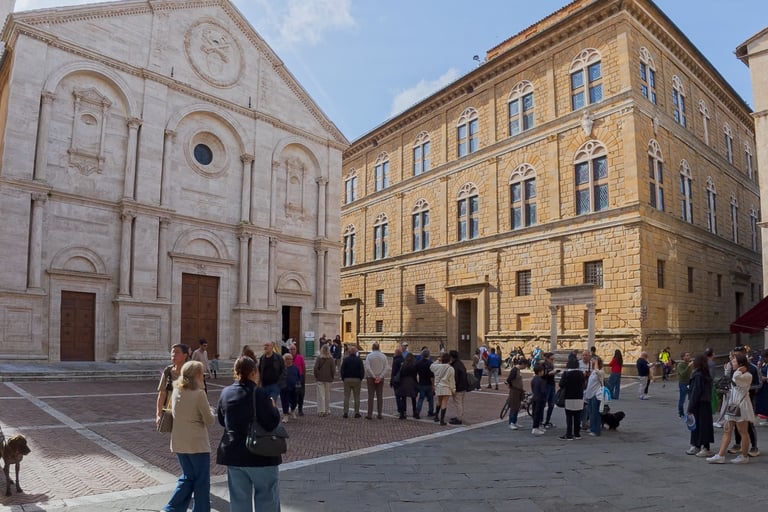
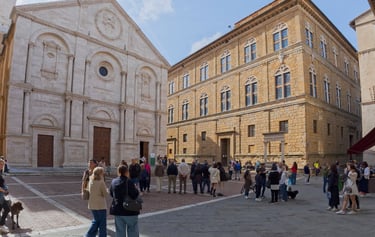
Pienza, on the left the Pienza Cathedral, on the right Palazzo Piccolomini, family palace of Pope Pius II
The views from Pienza are breathtaking
Connect:
Join us for stories and fresh perspectives.
Contact US:
Subscribe:
© 2025. All rights reserved.