AI-free. Captured, not generated

Driving a Camper Van through Europe
Some thoughts on what it's like and what to consider when driving a Camper Van through Europe and specifically Italy.
TRAVEL
Alex & Miia
11/27/2025
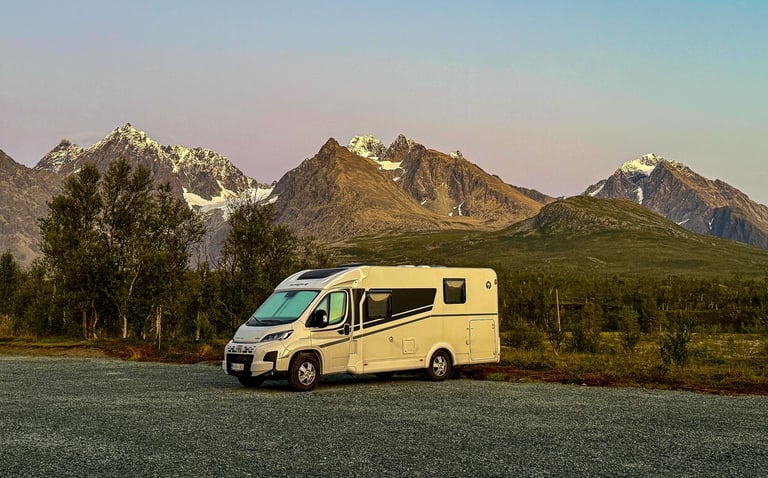
Parked for the night somewhere legal
Driving a Camper Van across Europe
We tend to drive on most of our trips. There are a few reasons why: we don’t always have a fixed route or destination, it gives us flexibility with regards to schedules and potential bad weather, we love slow travel and we travel with our dog, Naava. Depending on the destination, planned duration and the time of year we either take our sedan - with or without the rooftop tent - or the camper van we have had now for around 8 months.
The first and most important thing we always do when we leave our home is get our “Trip Coffee”. It started as a necessity because we often left very early but then became a ritual we now won’t compromise on. Along with the coffee we get some kind of fresh pastries, croissants, cinnamon buns, doughnuts or something similar. Only after these are secured, the trip can truly begin.
This time we drove from Espoo in Finland to Siena in Tuscany, to spend two months in Italy, working remotely and with the only goal of trying to see as much of the region as possible. We have both travelled in other parts of Italy before and now we wanted to see this specific region in an off season period. Driving from Finland to the Mediterranean happens either by taking the ferry to Tallinn in Estonia and then driving south through Latvia, Lithuania, Poland, Germany, Austria and Italy or taking the ferry to Sweden and driving through Sweden, Denmark, Germany, Austria, Switzerland and Italy. We chose to start with the latter route and then go back using the first one. In terms of distance, there’s not a huge difference.
A third option would also be to take a ship from Helsinki directly to Germany, to Travemünde, but we did not consider this, as the travel time (30 hours) would have been too long for our dog, who is not yet very used to traveling by ship.
The trip takes about four days, depending a bit on how aggressively you want to sit behind the wheel and how often you need to take a break for some coffee, food or just stretch your legs. With Naava we have found that a break every three hours or so works well for all of us, the total travel time in a day usually being less than 10 hours including the breaks.
Driving through Sweden is easy and straightforward. Roads are in excellent condition and finding suitable rest spots is easy. At our pace, starting north of Stockholm (Kapellskär) around 6.30 in the morning, we arrived in Denmark at our campsite just beside the Storebæltsbroen Bridge in the evening around 17:30.
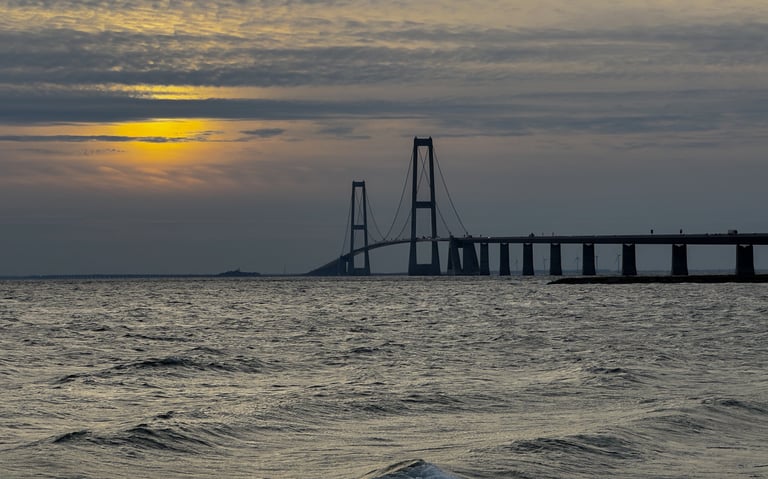
The first surprise of the trip was when we headed over the Øresund bridge to Denmark. There are two major bridges you have to cross if you want to avoid ferries when you drive through Denmark to Germany and they both are toll bridges. We knew this, but hadn’t checked the fees in advance. Turns out the combined road toll for these bridges was about €200,- for a van our size! Other than the price, the crossing is a breeze unless there are strong winds, which of course we had. The bridges are built with integrated wind deflectors so the storm has to be really significant in order for the bridges to close but as
we crossed, I kept a very moderate speed and had to concentrate on driving 100% as a camper van is like a big sail in a crosswind.
After Denmark we started down through Germay past Hamburg and headed to Sommerach, near Wurtzburg for the night. The drive was uneventful apart from getting stuck in traffic caused by roadworks the entire way and ending up spending an extra two hour because of this. No tollroads and motorways the entire way so driving was easy. Sommerach was a charming little town with many wineries and the campsite there was luxurious. After a good nights sleep, showers and visit to the towns local bakery and wineshop we headed south again the next day with the goal of reaching our campsite just outside of Lugano. This was the most scenic part of the drive and although a large part of crossing the Alps is done in tunnels, there’s plenty of stunning scenery along the way. We arrived in Lugano late afternoon and settled down by the lake. Now, Switzerland is not part of the EU, so certain things don’t apply there. One of them is the mobile phone contract terms and conditions that are the same as in your home country all over the EU but not here. Just by taking a couple of short calls and using the mobile data connection to send some messages and of course load the route on Google maps, resulted in an over €40,- extra bill on my invoice at the end of the month. Switzerland is expensive.
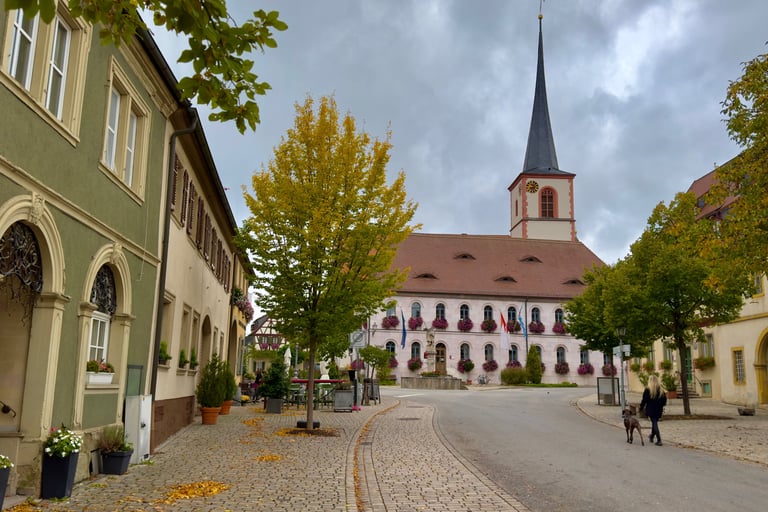
Sommerach, Just east of Wurtzburg
The Storebæltsbroen the last long bridge before Germany
The final day of our drive was also Miia's birthday, so before hitting the road again we found a small local pastry shop and got us some nice treats to go with our Trip Coffee. The final leg from Lugano to Siena was very relaxed. The sun was shining, traffic was moderate and apart from a couple of mishaps on toll stations, everything was easy. The toll stations in Italy take getting used to by someone who comes from a country where they simply don’t exist.
The toll stations are simple enough, the thing is there are different kinds. The simple one is to just drive up to the toll booth, flash your credit card or mobile phone (Apple Pay works) and wait for the gate to open. The other kind requires you to press a button and take a ticket that you then carry to the destination booth. Simple? Yes, if it works. On one occasion the machine would not give us the ticket and after a couple of minutes of fumbling, someone decided to just open the gate. On a second occasion, the destination booth would not read the ticket which resulted in a discussion in Italian (which I don’t speak) with an attendant on the line, who then made the booth print out an invoice that had to be paid online within two weeks. At least that worked well enough. In any case, we tried to avoid toll roads throughout the trip as we preferred the more scenic roads anyway.
Driving an almost 7m long and 2,14m wide van in the Tuscan countryside was sometimes a bit challenging. Some roads are very narrow and tree branches regularly hang over the roads, scratching the side and roof of the camper, making noises that sound like a pig is being killed on top of the van.
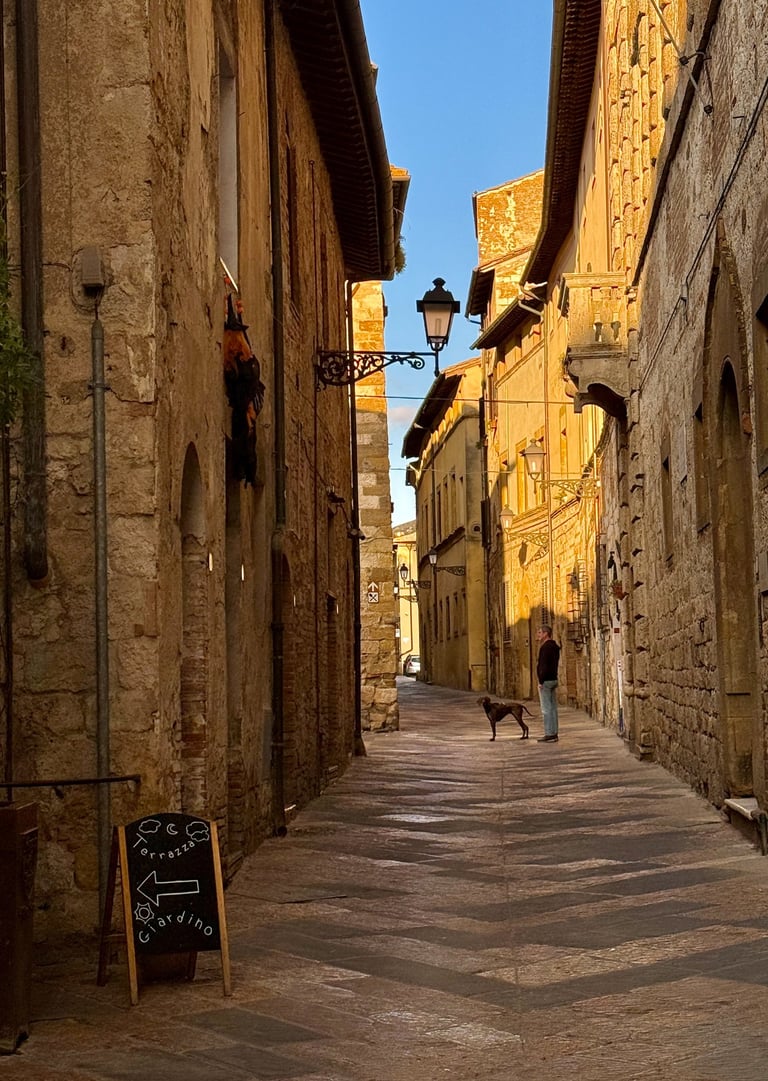
The old medieval towns are also a no-go but most of them have spacious parking lots just on the outskirts of town with special areas reserved for RV’s. The old streets are very narrow and I would really not like to get stuck in one of those alleys.
Driving around Tuscany in our RV had another big advantage. You can go off in any direction for the weekend and stay the night if you want to without any advance reservations. Also, some Wineries offer campsites for visitors that take their wine tasting tours. A good way to visit as you don’t have to drive after the tour.
Other things to consider besides road tolls are the Toll Stickers you have to purchase before entering into Austria or Switzerland. You can buy them at gas stations but the easiest way is to get the online. Driving in those countries without one can result in hefty fines.
Also, certain countries have requirements for equipment you have to have in your car (even smaller ones), like fire extinguishers, wedges for holding the car, hi-vis vests etc. It’s worth looking this up before your trip as regulations vary even inside the EU. Traveling in the mountains in the winter also requires snow chains and driving with studded tires is forbidden in Central Europe but not in Scandinavia and Finland, where winter tires are mandatory between October and March, depending on weather and road conditions.
If you are interested, there's a series of videos on all the places we visited during our trip to Tuscany. You can access the whole playlist <HERE>
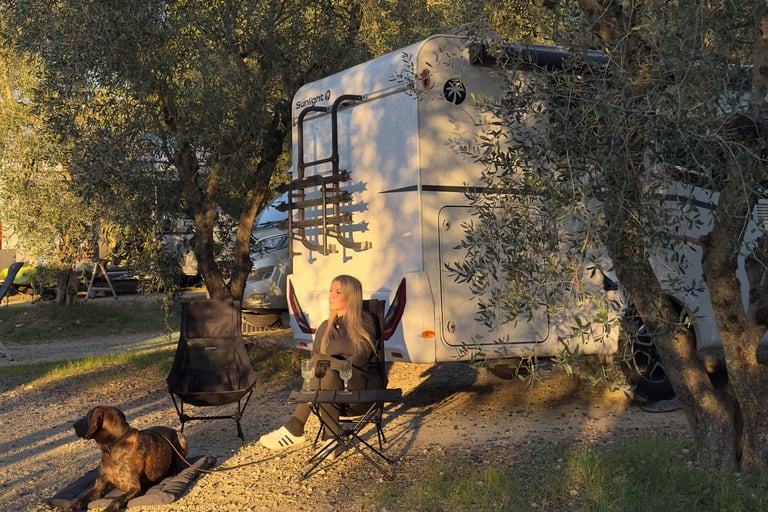
Our first campsite for 3 days outside of Siena
Roaming the narrow streets of Colle di Val d'Elsa
Connect:
Join us for stories and fresh perspectives.
Contact US:
Subscribe:
© 2025. All rights reserved.